OARS AT LARGE
The Ocean in a High-CO₂ World Symposium 2026
Mā te kōrero, kia mārama. Mā te mārama, kia mahi tahi. Mā te mahi tahi, kia mōhio. Moving from Understanding to Action using Multiple Knowledge Systems
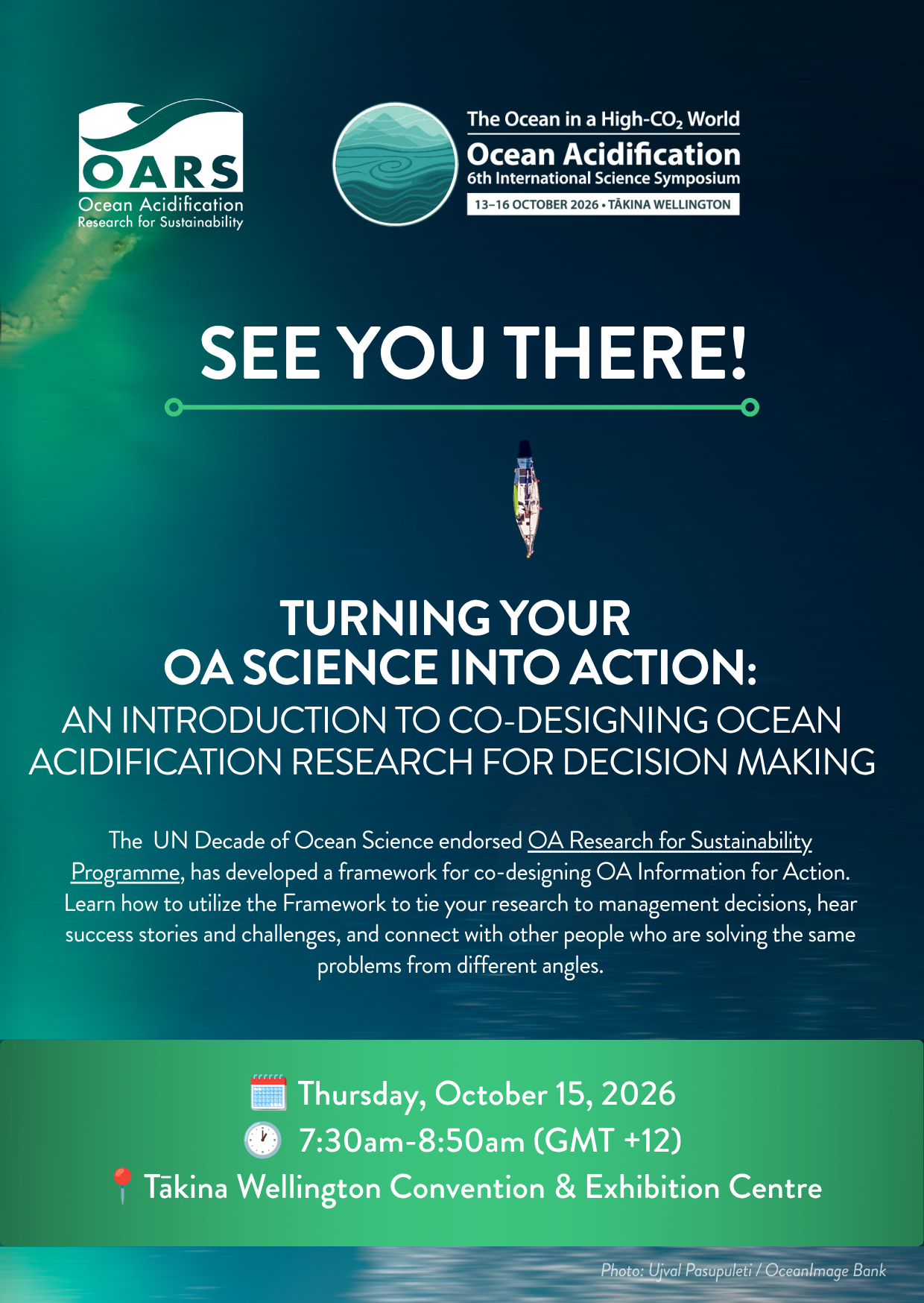
Researchers, policymakers, and thought leaders from across the globe will represent OARS during The 6th International Symposium on the Ocean in a High-CO₂ World held in Wellington, New Zealand.
In a workshop held on October 15, participants will learn how to utilize the OARS Framework for Action to tie their research to management decisions, hear success stories and challenges from OARS researchers, and connect with other people who are solving the same problems from different angles. Special focus will center on how to co-develop ocean acidification science projects with these different decision making categories in mind. Participants will be asked what co-design of OA research projects tailored to user needs look like and explore the steps for setting up successful decision-relevant collaborations from the start.
The format will include a mix of presentations and break-out sessions. Workshop participants will have the opportunity to contribute to the OARS Framework Working Group as regional champions, working to improve and promote the Framework locally and internationally through the UN Decade of Ocean Science.
Tea and coffee catering will be provided.
Interested in joining us? Register for the symposium here.
Ocean Sciences Meeting 2026
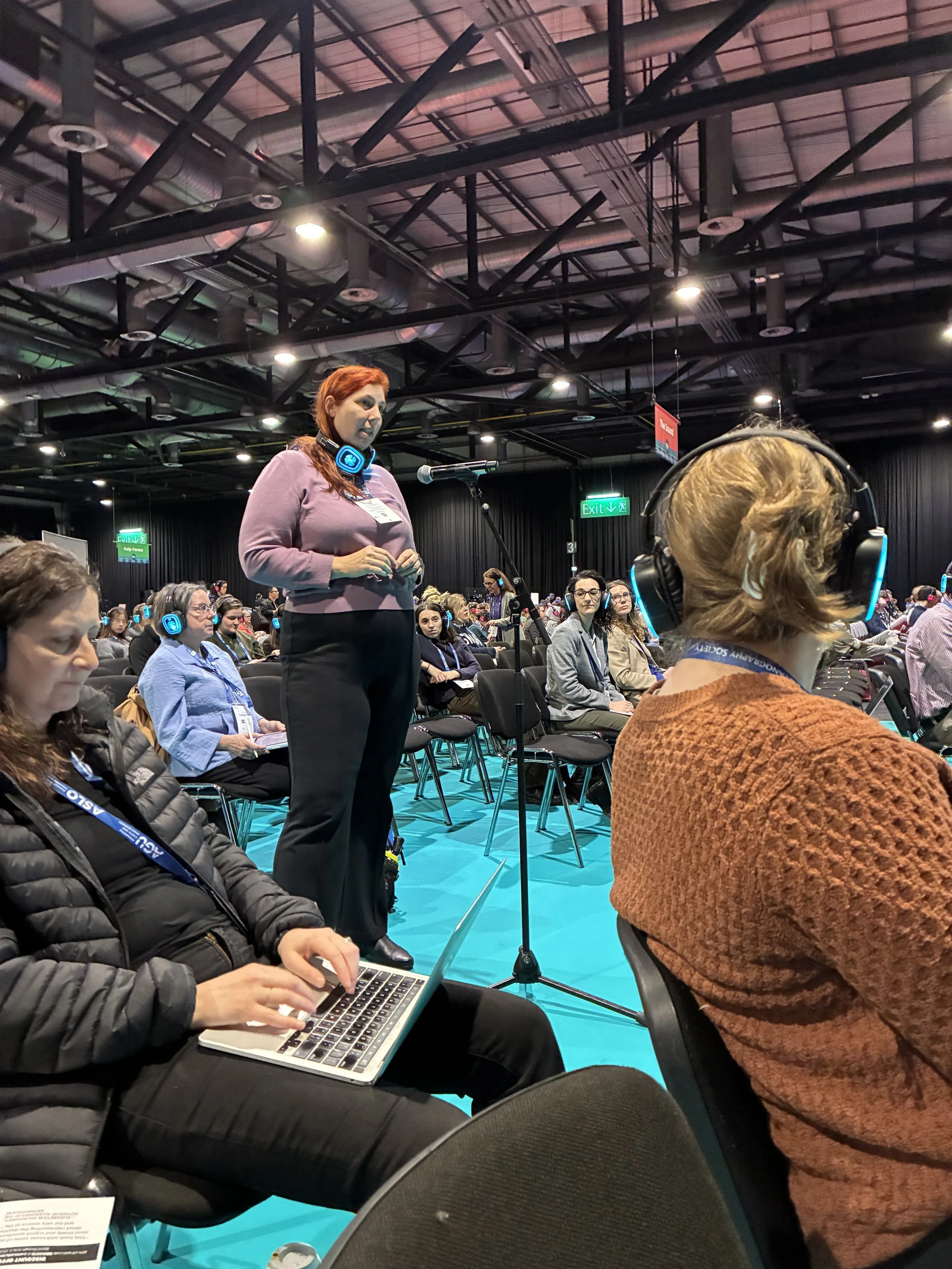
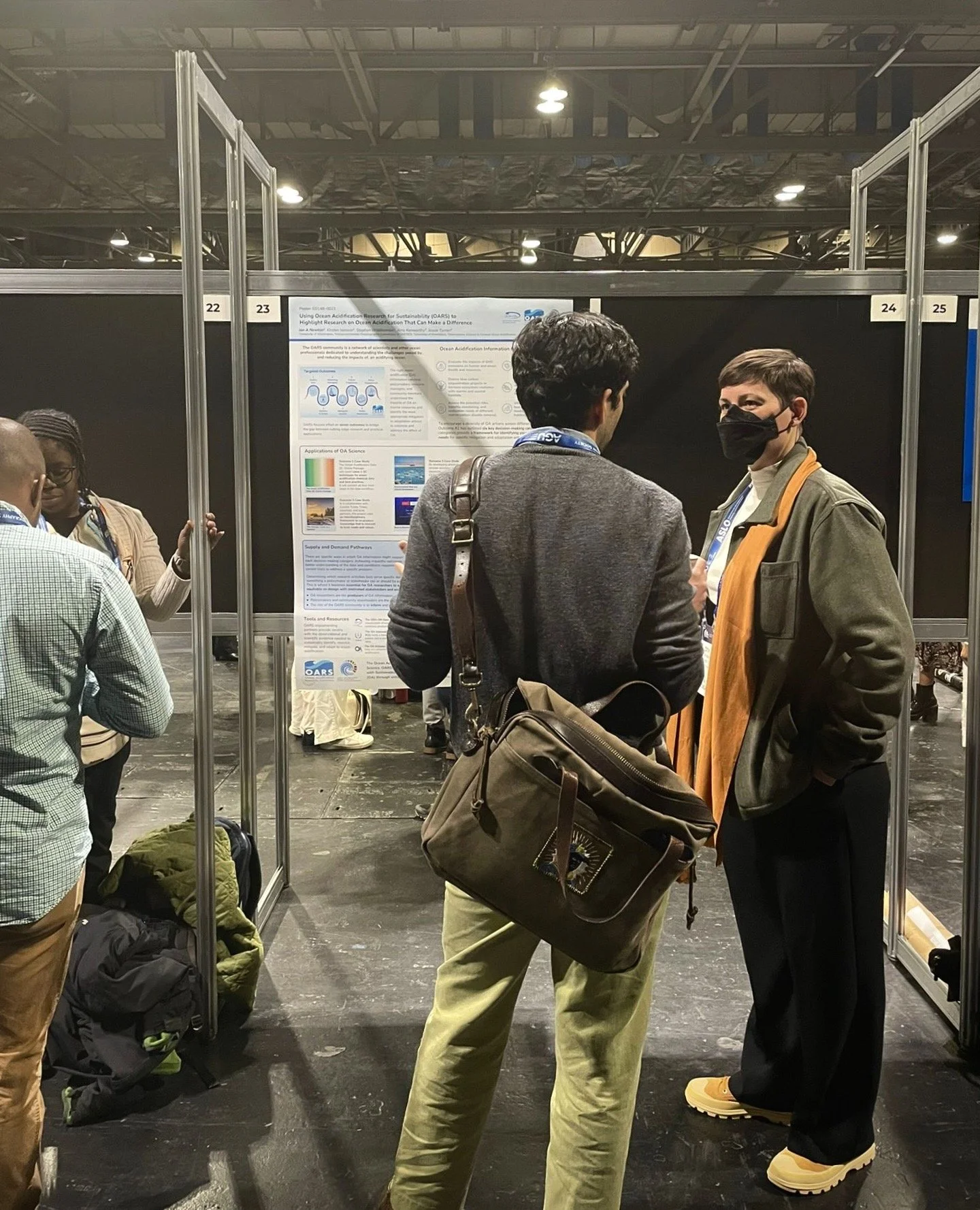
The 2026 Ocean Sciences Meeting (OSM) was hosted at the Scottish Event Center in Glasgow, Scotland from February 23 - 27. As the flagship global conference for the ocean sciences, OSM provides an opportunity for OARS members to connect directly with peers in the scientific community to build relationships and share the latest ocean and coastal acidification research.
Among the bustle of this year’s plenaries, posters, and presentations, OARS celebrated the work of partner researchers affiliated with the Global Ocean Acidification Observing Network (GOA-ON), NOAA's Ocean Acidification Programme (OAP), Woods Hole Oceanographic Institute (WHOI), Virginia Institute of Marine Science (VIMS), and International Carbon Ocean Network for Early Career (ICONEC)..
OARS working group member, Edith Mari, participated in Monday’s poster session in support of the OARS Framework for Action. Ms. Mari was also invited to participate in the GOA-ON Executive Council meeting ahead of the conference, where members explored synergies with OARS to ensure regional OA information being produced by GOA-ON is actionable for decision-makers.
In another strong start to the week, OARS working group member Dr. Liz Perotti presented creative science communications strategies in a presentation titled "Making the Invisible Visible: Communicating and Advancing Capacity of Overlooked and Undervalued Ocean Science."
“Without having an easily recognizable, charismatic spokesperson or icon, communicating ocean acidification science requires us to capitalize on new communication channels that focus on the impacts and response to OA instead of the chemistry.”
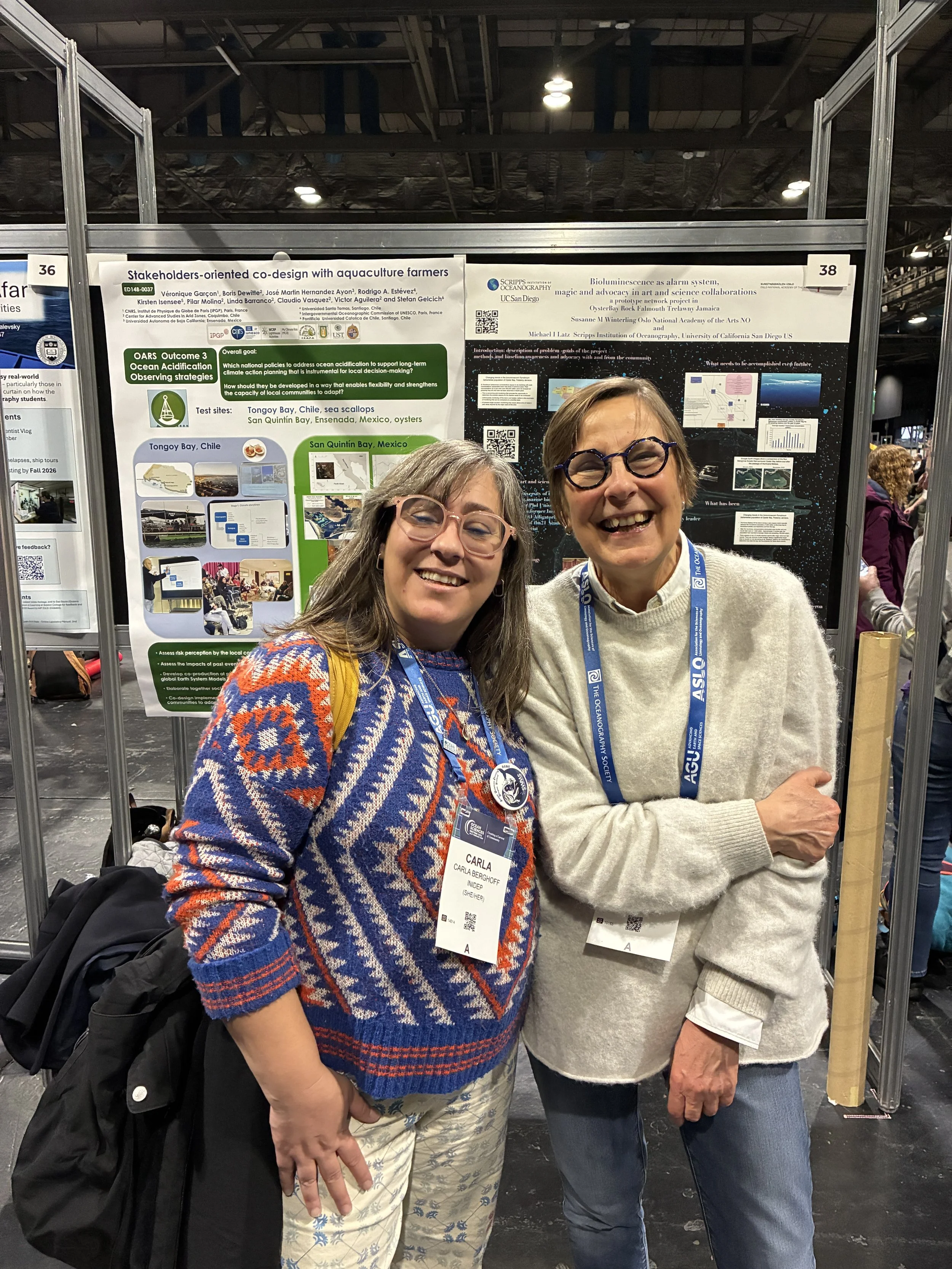
Other OARS working group members, co-champions, and co-leads attended OSM26 to showcase their work, including: Jan Newton, Punyasloke Bhadury, Carla Berghoff, Veronique Garcon, Nico Lange, and Katherina Schoo.
In the context of climate change and the ever growing demands on our ocean and marine resources, OSM continues to be an important global convening for the ocean sciences community to ensure ongoing monitoring, science and research is actionable for decision making and benefits healthy oceans and people.
This is especially true for the OARS community, as we work to facilitate productive science to policy conversations on the topic of ocean acidification at local to global scales. We are proud of the hard-won work of our esteemed colleagues, and we strive to turn that valuable OA data into tangible policy action.